Column · 13 September 2026
3 min read · 1 read
The Smile That Went Too Far
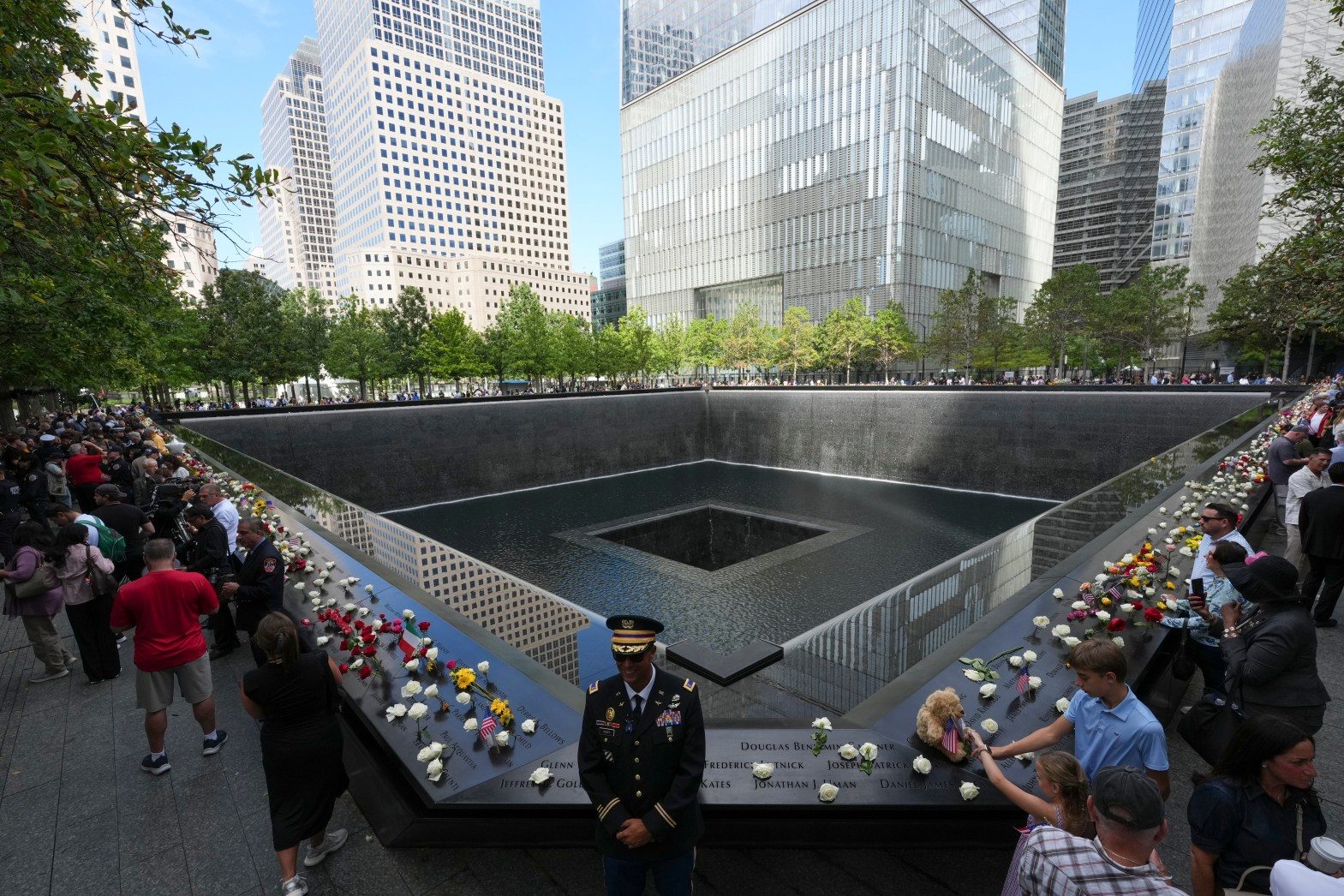
On September 11, 2026, Ground Zero read the names of the dead. Mayor Zohran Mamdani had been asked by more than 100,000 petitioners to stay away. He came anyway — and was filmed smiling beside Alexandria Ocasio-Cortez. Four seconds, a petition ignored, an oath on the Quran, a prayer that spoke of the sword against infidels, a ceremonial pen handed to the lawyer of an al-Qaeda terrorist: the question is no longer protocol. It is whether the victims still come first.
II. My take
This behavior is completely inappropriate.
Not because a man doesn’t have the right to greet someone. But because it was neither the time nor the place. A commemoration is not a stage. It is the one moment when the victims reclaim the front row. Smiling at that very second pushes them back a step. It tarnishes their memory—even unintentionally, and especially when subsequently denied.
The families had asked him to stay away. Over 100,000 people had made that request. Arriving "proudly" and then offering that image to the cameras is not honoring the deceased. It is mocking those who still bear their names.
Some might say four seconds prove nothing. Four seconds are enough when they occur in the middle of the reading of victims' names, while others are weeping for their loved ones. Indecency does not require a speech. It requires a setting, and the wrong gesture at the wrong moment.
This gesture did not happen in a vacuum. Mamdani is suspected—rightly or wrongly—of ties to Islamist circles. His background is far from neutral:
- co-founder of Students for Justice in Palestine;
- a rap tribute to the Holy Land Five, convicted of funding Hamas;
- persistent ambiguity regarding the slogan "globalize the intifada";
- the appointment of Ramzi Kassem;
- a tribute to Imam Siraj Wahhaj.
On January 1, 2026, just after midnight, in the old City Hall subway station, he takes the oath of office as Mayor of New York, his hand on the Quran. The city's first mayor to do so. 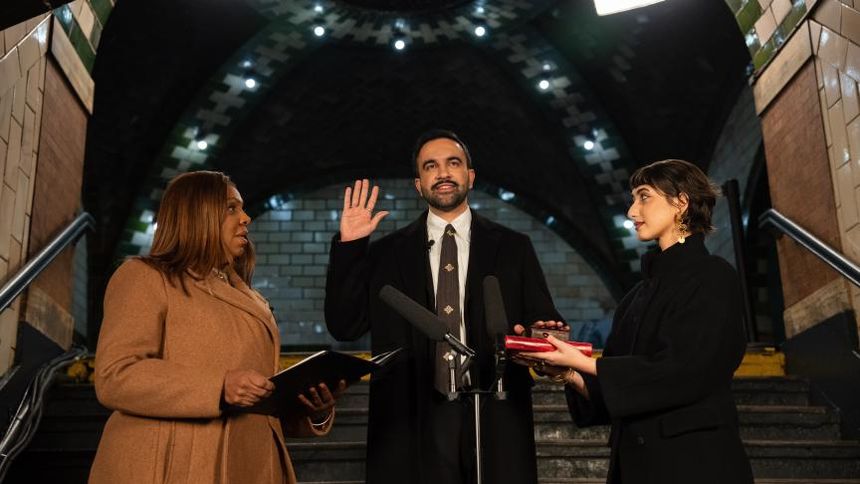
On February 20, 2026, at the Al-Khoei Islamic Center, he attends Friday prayers. It was not a Surah from the Quran, but a Shiite invocation to the Mahdi. MEMRI translates it as follows:
“I ask Allah to make me one of those who await you [the Mahdi], follow you, and support you against your enemies, and one of those martyred in your presence... Through your hands comes relief for the believers and the slaying of the infidels by your sword.”
The Quran contains a text often called the Verse of the Sword (Surah 9, At-Tawba, verse 5): “Kill the polytheists wherever you find them.” The imam did not quote this verse word for word. He said something else, just as clear: the sword against the infidels.
On September 4, the same thread continues. Mamdani signs memorial decrees, then passes the ceremonial pen to Ramzi Kassem, the lawyer for Ahmed al-Darbi, an Al-Qaeda terrorist. First, the invocation of the sword. Then, the pen of mourning handed to the man who advocated for an Al-Qaeda operative.
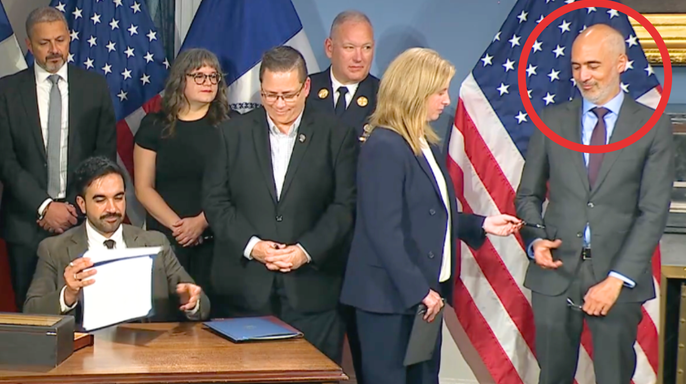
Two scenes. A single message for the families: their memory is no longer the focal point. It is merely scenery.
That is the moment when, in my eyes, New York shifted. Not simply because a Muslim mayor exists—the city has the right to one, as do thousands of New Yorkers. Because Islamism—with its slogans, its networks, and its silences—has ceased to be a scandal and has instead become part of the scenery. We have forgotten that this is an ideology which divides the world into believers and infidels. We forgot quickly enough to find it normal for a mayor—whose presence was contested by the families—to insist on attending, and for the subsequent discussion to focus on smiles rather than on the proper place for such figures.
Islam, as I see it here, is not merely a private faith. It is also a political doctrine, a worldview, and at times, a logic of conquest. To reduce it to "just another religion" on a day dedicated to honoring victims is, in itself, a choice to forget.
A nation that no longer imposes silence upon its elected officials on the day it names its dead is no longer holding a commemoration; it has merely fallen into a habit. And in the face of victims, habit is already a form of forgetting.
My sincere condolences to the families. Emmanuelle Beauchamp